

A Letter from Róng Museum of Art
Dear media friends,
It is with heartfelt excitement and a sincere sense of purpose that I share the beginning of a new chapter in my professional life. Since February 2026, I have had the honor of joining Róng Museum of Art in Shenzhen’s Houhai district as its founding Director. As the museum’s very first team member, I feel both the responsibility and the joy of shaping its foundational vision, building its inaugural team, and guiding the Museum toward its public opening in the second half of 2027.
When I relocated to Hong Kong from Beijing in 2012 to contribute to the founding of M+, and later, to lead Tai Kwun Contemporary, I did not imagine that fourteen years in the city would become so profoundly formative. This journey has reshaped me from a curator immersed in artistic narratives into an institution builder committed to creating meaningful public spaces. These experiences shaped my understanding of not only how museums come into being, but why they hold such meaning. With that experience behind me and renewed anticipation for what lies ahead, I step into a new chapter.
Located in Shenzhen, Róng Museum of Art is set to become an important presence within the increasingly interconnected cultural landscape of the Greater Bay Area. Róng Museum of Art will offer exhibition programmes shaped by an international perspective, attracting audiences from across the Greater China region and the world. Róng Museum of Art forms part of the M80 complex in Houhai, developed by Tenova FUTURE. Grounded in the philosophy of Mutualism, Message, and Memory, M80 envisions a new, all day urban ecosystem that weaves together work, living, culture, commerce, leisure, entertainment, and nature. As the cultural landmark within this ecosystem, Róng Museum of Art is an essential component of its overall vision.
“Róng” is a Chinese character rich with layered meanings, it evokes melting, blending, convergence, and fluid exchange. Naming the museum ‘Róng’ reflects our aspiration to rethink what a cultural institution can be in the 21st century. At the heart of this vision is the philosophy of inclusive coexistence: in an age shaped by global interdependence, acknowledgment forms only the first step. What follows, and what truly matters, is an openness to understand, to learn from one another, and to grow together. In the 21st century, a museum is not only a catalyst, advocate, and steward of art; it must also be an open, inclusive platform that offers meaningful experiences and becomes a vibrant, trusted, and approachable learning institution. Only by doing so can cultural institutions achieve true sustainability amid the challenges of our time.
Róng Museum of Art has a total floor area of approximately 4,500 square meters. The main structure has already been topped out, and the design and construction of interior spaces are now progressing optimally. We continue to move forward with full momentum toward our planned opening in the second half of 2027 and look forward to sharing further updates in the near future, ranging from architectural and spatial developments to the formation of our team, and the shaping of our opening programme.
I am deeply grateful to the Tenova FUTURE team for their trust, and for granting me the opportunity to take part in, and to lead, this significant cultural undertaking. My thanks also extend to our many supporters: to our partners for their confidence, to the wider community for their encouragement, and to our future audiences whose anticipation inspires our work. It is through your belief and encouragement that the vision for Róng Museum of Art continues to take form.
Róng Museum of Art aspires not only to become a cultural landmark, but also to serve as a bridge between art and the public. My hope is that it will grow into a place of discovery, learning, and exchange for every visitor who walks through its doors. Thank you once again for your continued support and interest. I look forward to welcoming you in the near future.
Pi Li
March 17, 2026, in Shenzhen
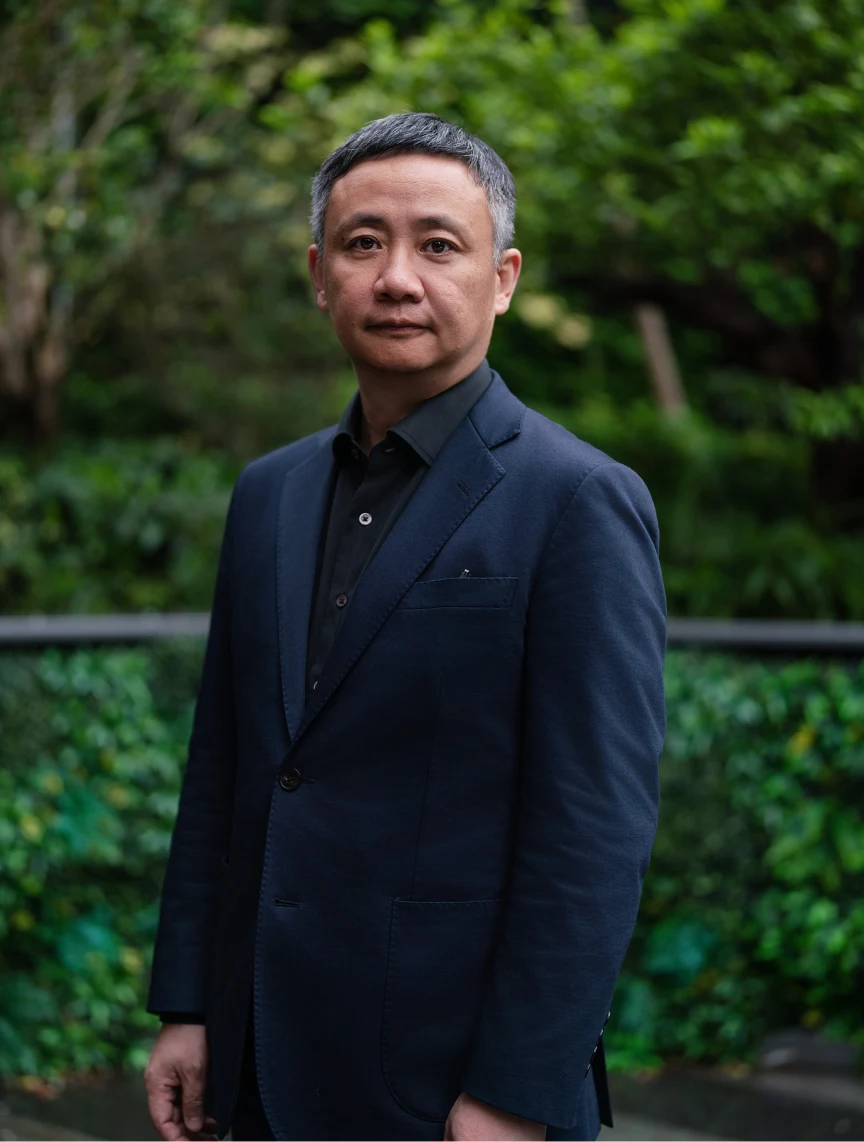
Dr. Pi Li, Founding Director of Róng Museum of Art
About Róng Museum of Art
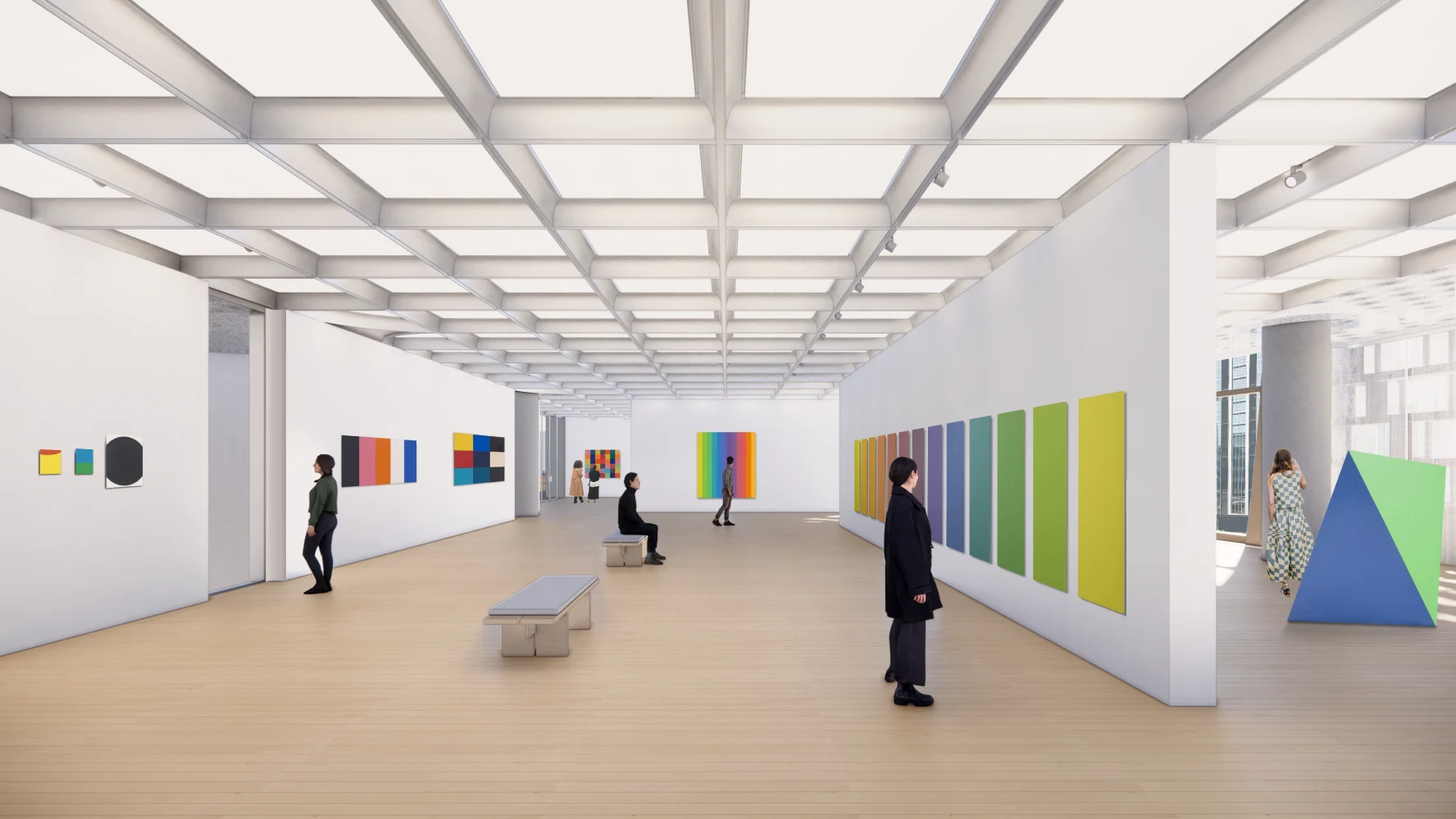
© Gluckman Tang Architects 2026
Located within the M80 complex in Shenzhen’s Houhai district, Róng Museum of Art serves as the cultural landmark of the development. The museum is dedicated to presenting and collecting creative practices from the 20th and 21st centuries—including art, architecture, design, moving image, performance, and digital media—through an international lens. By engaging with contemporary artistic expression, the museum invites audiences to reflect on the past, imagine the future, and understand themselves more deeply through dialogue with diverse cultures. At the heart of the museum’s mission lies the principle of coexistence through mutual understanding.
As a key cultural component of the M80 complex, developed by Tenova FUTURE, Róng Museum of Art carries the responsibility of contributing to the cultural ecology of the Greater Bay Area. By fostering connections between local and global communities, the museum aims to become a dynamic cultural space defined by innovation and possibility—one that plays an active role in shaping the future of the arts and the broader cultural landscape.
About M80
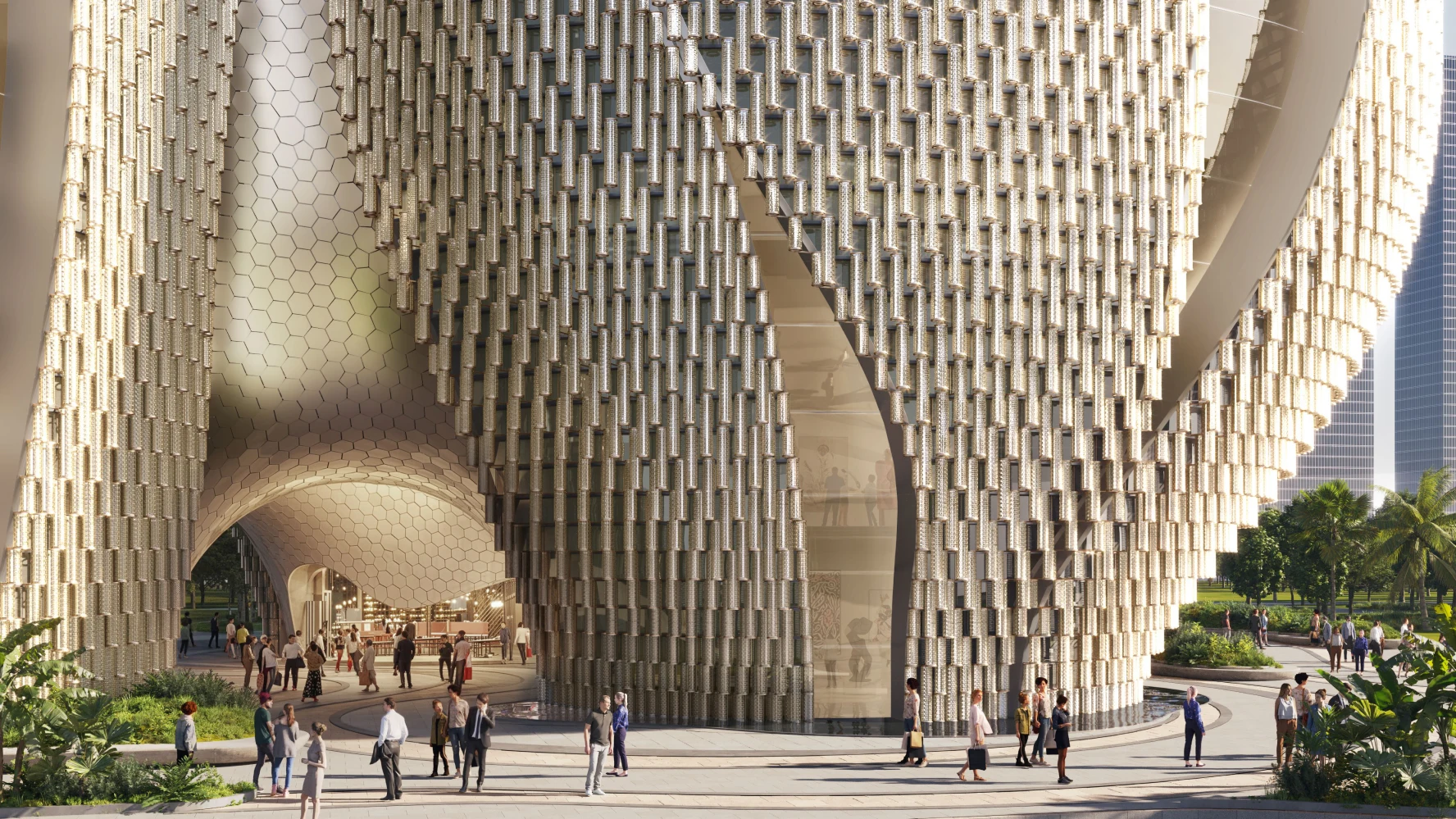
Róng Museum of Art by Ole Scheeren © Buro-OS
M80 is located at the heart of the Guangdong–Hong Kong–Macao Greater Bay Area and is envisioned as a 24‑hour urban ecosystem where work, living, culture, commerce, leisure, entertainment, and nature are seamlessly integrated. In addition to Róng Museum of Art, the development encompasses a constellation of commercial spaces, office towers, Upper House Shenzhen, and serviced apartments. The overall architectural concept, conceived by architect Büro Ole Scheeren, embraces a sense of lightness and permeability, dissolving boundaries between interior and exterior, The museum’s interior spaces are being designed by Gluckman Tang Architects, while the interiors of Upper House Shenzhen are led by André Fu. The collective contribution of these contemporary taste-makers shapes M80 into a place “where countless conversations can unfold,” a fluid spatial environment that sparks encounters, exchange, and urban vitality, an exploration of a new kind of metropolitan energy beyond the everyday.
The “M” in M80 carries the project’s philosophy of Mutualism, Message, and Memory, while “80” echoes 1980, the year marking the beginning of Shenzhen’s Special Economic Zone. M80 connects innovative industries, serves as a place of emotional grounding for residents and visitors, and offers a new destination for contemporary art and cross‑disciplinary culture. Looking ahead, M80 is poised to become one of Shenzhen’s most iconic civic anchor points, a site where distinctiveness, creativity, and humanistic spirit continually shape a new urban ethos shared between the city and its people.
