MENU
close

About Us

The Róng Museum of Art presents contemporary art and intermedia practices through a global lens.

Located in Shenzhen, China, the Róng Museum of Art is dedicated to showcasing and collecting a wide range of contemporary creative practices, including visual art, moving image, performance, and digital media. By focusing on the arts of our time, the Museum is committed to critically examining its role as a cultural institution, positioning itself at the intersection of history and the future while fostering global dialogue and cross-cultural exchange.


At the heart of the Museum is the principle of “interconnectedness” (gongrong). Rong is an ancient Chinese character with layered meanings encompassing notions such as melding (ronghua), integration (ronghe), fusion (ronghui), and exchange (rongtong). This character encapsulates our vision for a cultural institution in the twenty-first century. In the age of globalization, “interconnectedness” signifies not only mutual respect, but also a desire to understand one another, learn from one another, and grow together.


Beyond offering inspiring cultural experiences, the Róng Museum of Art aims to become an open, diverse, and trusted institution for learning and knowledge exchange that contributes to the sustainable development of culture.


Occupying more than 4,000 square meters, the Róng Museum of Art is scheduled to open to the public in the second half of 2027. The Museum will simultaneously launch its digital space, offering essays, research articles, and regular updates on exhibitions, programs, and initiatives. As it continues to evolve, this online presence will extend the ways art communicates with life.


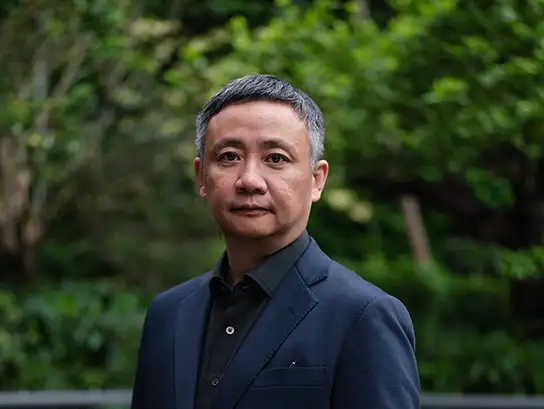
“Through its exhibitions and programs, the Róng Museum of Art seeks to encourage visitors to view constant transformations of life as an ongoing process of artmaking. Each person’s life carries the potential to become a unique work of art, one that resonates with and inspires others, so that together we can create a world of possibilities.”

—Pi Li

Architecture

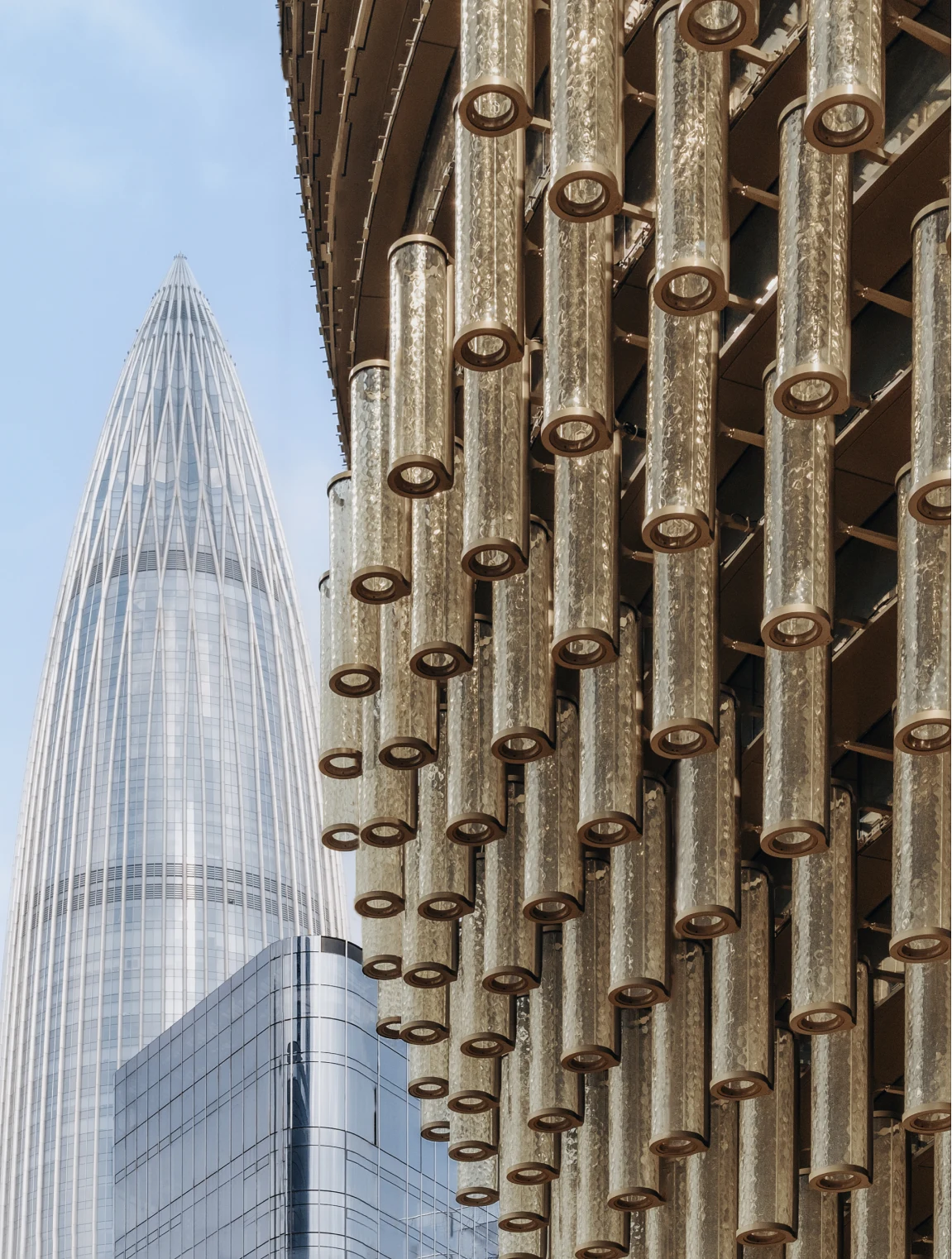
Róng Museum of Art by Ole Scheeren © Buro-OS,Photograph by Yumeng Zhu

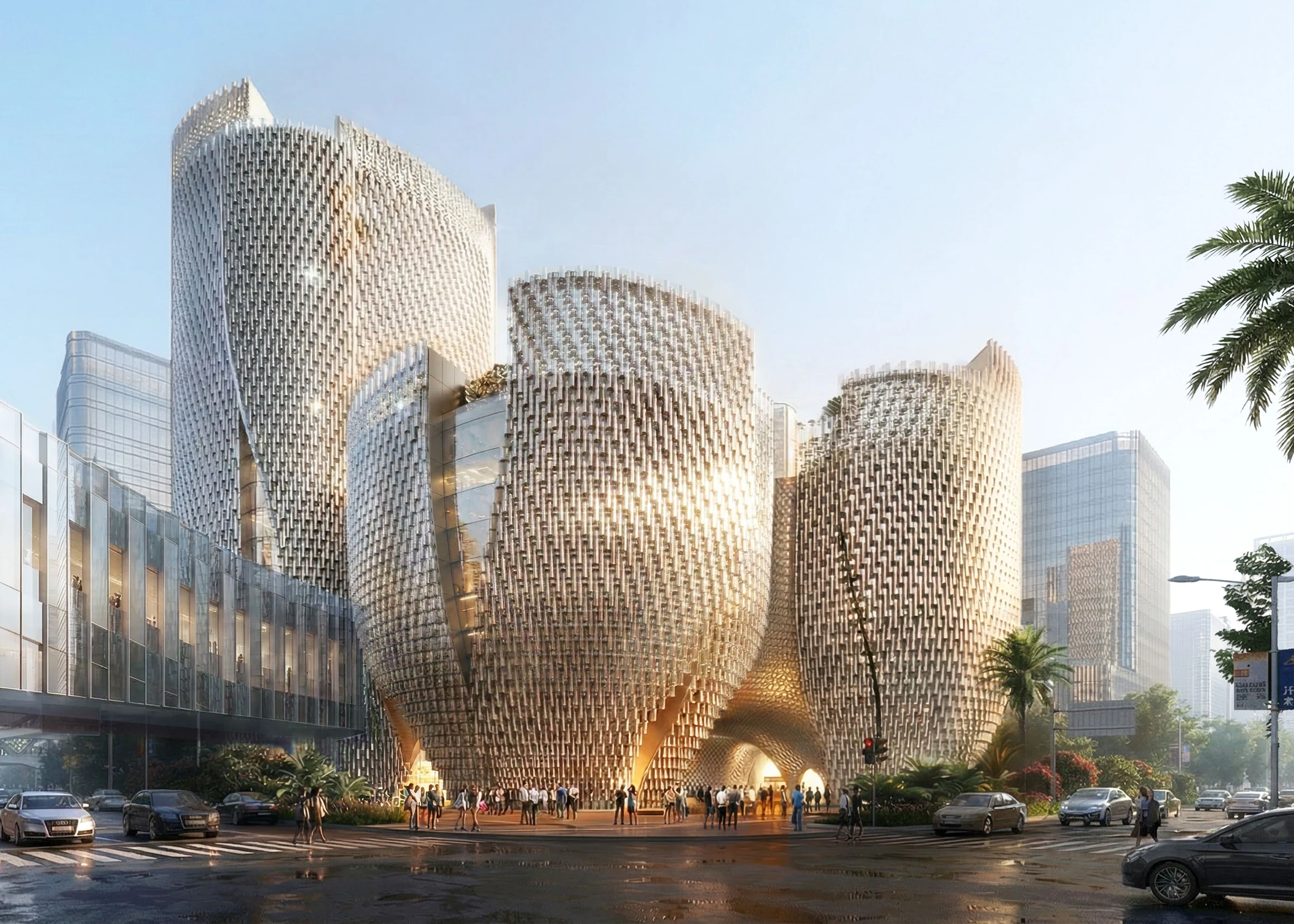
Róng Museum of Art by Ole Scheeren © Buro-OS,Photograph by Yumeng Zhu

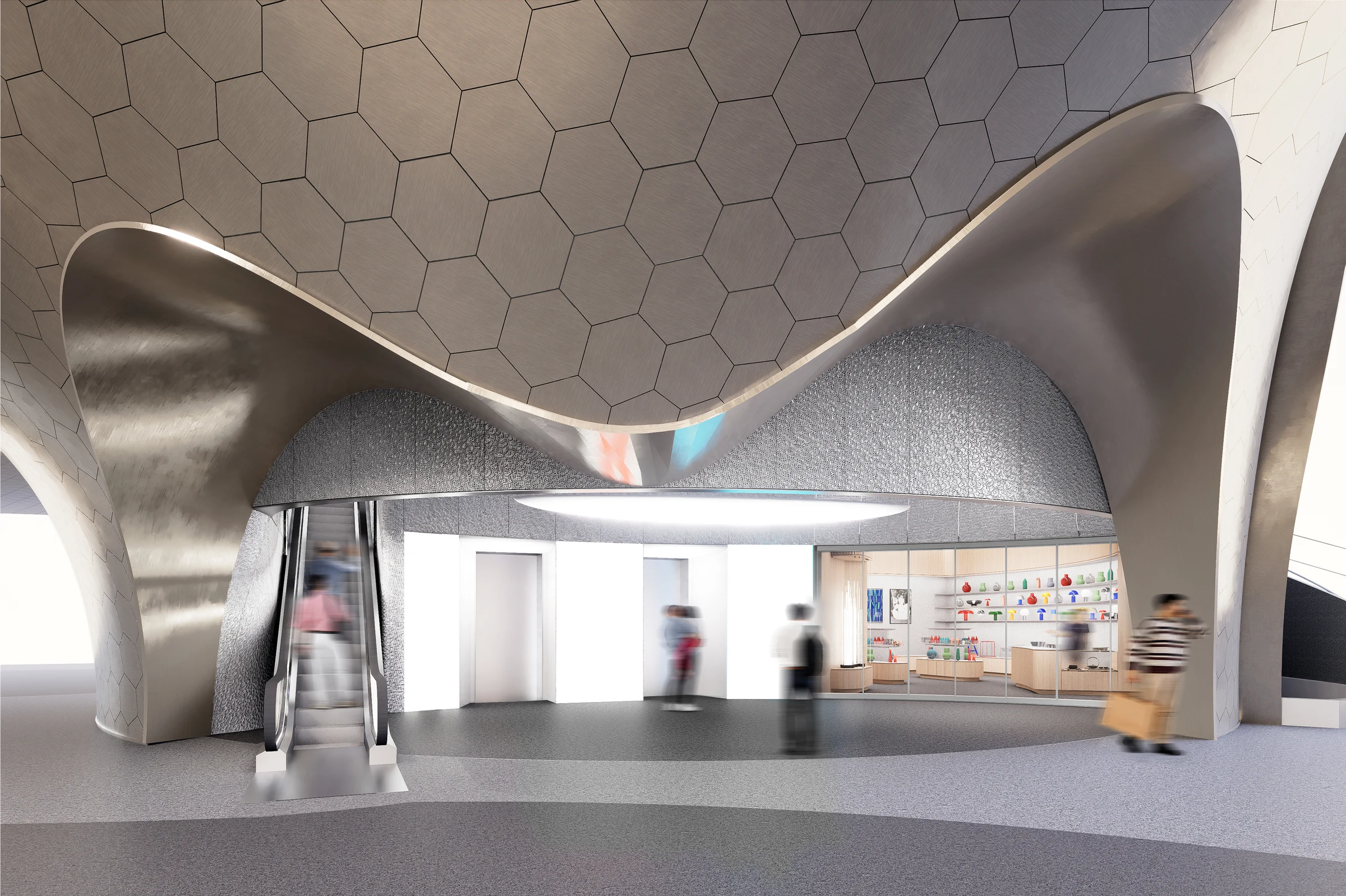
Róng Museum of Art by Ole Scheeren © Buro-OS

Róng Museum of Art by Ole Scheeren © Buro-OS

The Róng Museum of Art is designed to generate curiosity.

invite movement and exchange, and inspire a sense of wonder. The building is a living system dedicated to culture, experimentation, and exploration.


The Museum spaces are elevated to form a series of sculptural pavilions that touch the ground as slender structures and expand as they rise, freeing up the ground as a public space and forming a distinctive figure within the broader ensemble of Shenzhen’s towers. The structure is wrapped in suspended glass tubes that act like leaves on a tree. They create layers of shade that filter sunlight, allow airflow, and reduce thermal effects.


Materiality, form, and technology come together to create an architectural system that is ecologically responsive.


“For me, architecture is essentially a question of symbiosis. It’s about understanding how people can come together in mutually beneficial ways. The Róng Museum of Art is unlike anything else in the world. While it possesses a distinctive visual identity, it is seamlessly integrated into the city as a gentle and subtle presence within the urban context.”

—Ole Scheeren

Spatial Design

© Gluckman Tang Architects 2026

© Gluckman Tang Architects 2026

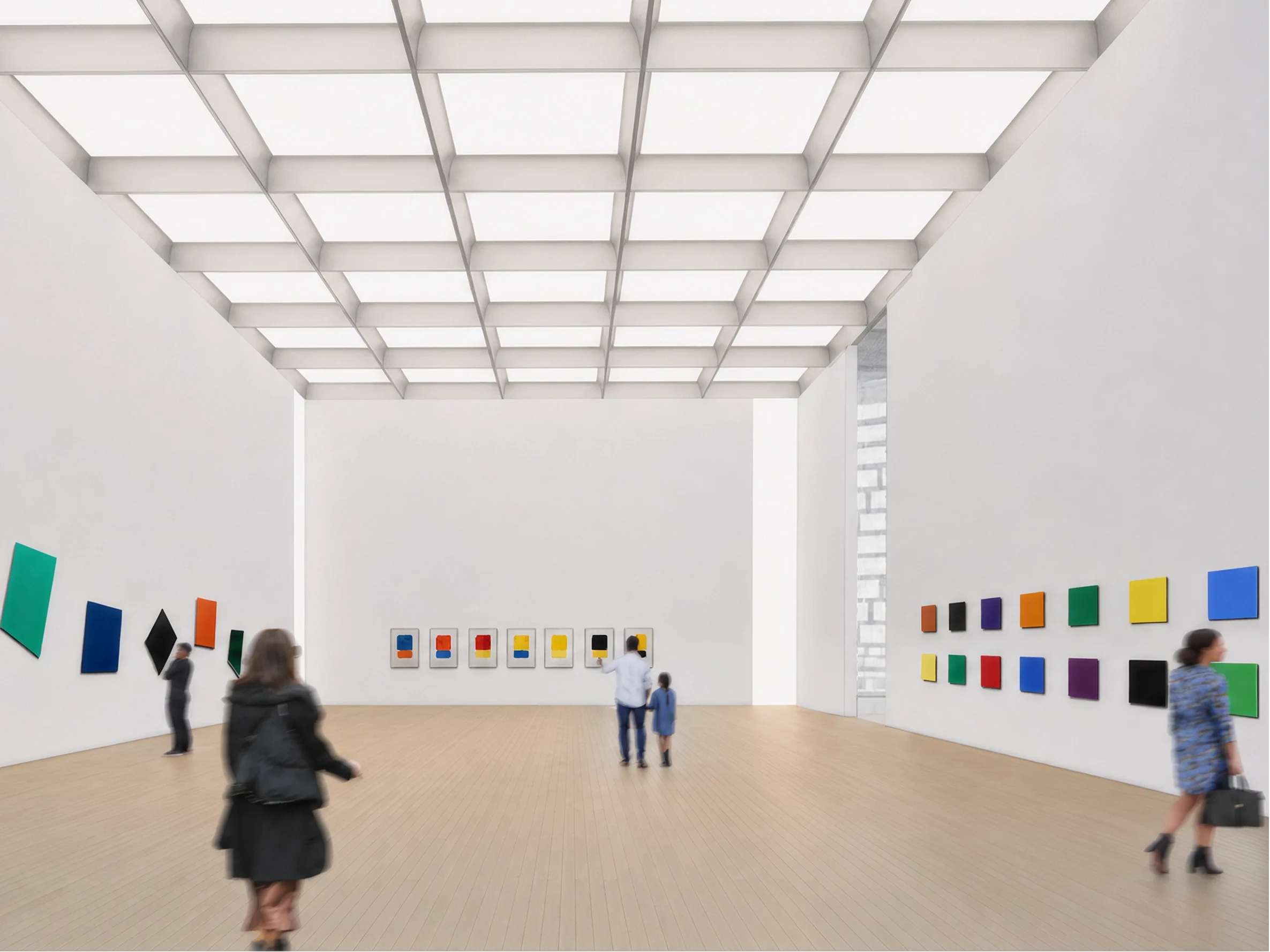
© Gluckman Tang Architects 2026

© Gluckman Tang Architects 2026

The Róng Museum of Art is an iconic building within the M80 urban complex where art, architecture, and urban life converge.

Guided by the Museum’s vision of “interconnectedness” ( gongrong ) and responding to Shenzhen’s dense yet porous urban fabric, the design provides a framework for exhibition, learning, and public engagement. Its galleries are arranged within a dynamic, daylit perimeter that encourages circulation and contemplation and echoes the layered network of streets, canals, parks, and elevated walkways of the surrounding Houhai neighborhood.


The concept of rong—integration, fusion, and exchange—shapes the symbiotic relationship between the geometric and the organic, the curated and the spontaneous. By highlighting the building’s structural grid, atrium, and distinctive light-filtering façade, the design creates an in-between realm that connects museum and city.


Visitors move between enclosed gallery spaces and the open perimeter, where framed views gradually reveal the city beyond and propose a dialogue between interior and exterior, art and everyday life. Education spaces and public programming are woven throughout the museum to support learning, foster community, and inspire future generations of artists, designers, and cultural thinkers.


“The critical relationship in art space is that between the viewer, the art object and the space they inhabit. This has evolved into a collective experience with broad constituencies and multiple art typologies set in a diverse array of art spaces.”

——Richard Gluckman

Press

For inquiries, please contact us via email at